
Scottsdale Lawn Edging Services
Choose our expert lawn edging for a polished, professional look that enhances curb appeal, prevents grass overgrowth, and makes yard maintenance easier than ever.
Get a Free QuoteOur Scottsdale Landscaping & Yard Care Services
When to Schedule Lawn Edging in Scottsdale, Arizona – Seasonal Guide
In Scottsdale, Arizona, timing your lawn edging is crucial for maintaining crisp, healthy borders and maximizing curb appeal. The region’s unique Sonoran Desert climate—with its hot summers, mild winters, and monsoon season—means that the best periods for lawn edging are typically in early spring (late February to April) and again in early fall (September to October). These windows avoid the extreme heat of summer and the cooler, less active growth period of winter, allowing for optimal grass recovery and minimal stress on your landscape.
Local factors such as the proximity to the McDowell Sonoran Preserve, the denser shade in neighborhoods like Gainey Ranch, and the sandy, alkaline soils common in North Scottsdale all play a role in determining the best time for edging. Homeowners should also consider Scottsdale’s municipal watering restrictions and the risk of drought, which can impact lawn health and growth rates. For more information on local environmental guidelines, visit the official city resource.
Local Factors to Consider for Lawn Edging in Scottsdale
- Tree density and shade coverage (e.g., mature mesquite or palo verde trees in Arcadia)
- Soil type and drainage, especially in areas near Camelback Mountain
- Seasonal precipitation patterns, including monsoon storms
- Municipal watering schedules and drought advisories
- Terrain and slope, particularly in hillside communities
- HOA or city restrictions on landscaping practices
Benefits of Lawn Edging in Scottsdale
Enhanced Curb Appeal
Weed Growth Prevention
Defined Landscape Borders
Low Maintenance Solutions
Increased Property Value
Professional Installation Expertise
Scottsdale Lawn Edging Types

Concrete Curb Edging
Concrete curb edging offers a durable and clean border for your landscape.
-
Brick Lawn Edging
Brick edging provides a classic and timeless look for garden beds and pathways.
-
Metal Landscape Edging
Metal edging delivers a sleek, modern appearance and long-lasting performance.
-
Plastic Lawn Edging
Plastic edging is a cost-effective and flexible solution for defining lawn boundaries.
-
Natural Stone Edging
Natural stone edging blends seamlessly with outdoor environments for a rustic feel.
-
Wood Landscape Edging
Wood edging adds warmth and a natural touch to garden borders.
-
Rubber Lawn Edging
Rubber edging is eco-friendly and safe, ideal for family-friendly landscapes.
Our Lawn Edging Process
Site Evaluation
Marking Edges
Cutting the Edge
Debris Removal
Final Inspection
Why Choose Scottsdale Landscape Services
-
Scottsdale Homeowners Trust Us
-
Expert Lawn Maintenance
-
Reliable Irrigation Solutions
-
Competitive Pricing
-
Professional Team
-
Satisfaction Guarantee
-
Personalized Service
Coordinating Lawn Edging Services with Scottsdale's Municipal Departments
Lawn edging in Scottsdale requires attention to municipal standards governing curb lines, sidewalk frontages, and right-of-way boundaries. Property owners and managers should be aware that edging debris—soil clippings, turf fragments, and decomposed granite—must not be swept or blown into street gutters, curb inlets, or storm drainage infrastructure. The city's stormwater management obligations under the Arizona DEQ Phase II MS4 program place responsibility on both residents and service providers to prevent landscape waste from entering the municipal separate storm sewer system. When edging along public sidewalks or roadway frontages, verify current right-of-way boundaries through the appropriate city division to avoid encroachment issues.
- Collect all edging debris immediately rather than allowing it to migrate into curb inlets or drainage channels
- Confirm property boundaries along public sidewalks before edging to avoid disturbing city-maintained surfaces
- Coordinate with the city if edging work requires temporary sidewalk or pathway obstruction
Scottsdale Transportation Department
7447 E Indian School Rd, Scottsdale, AZ 85251
Official Website: Scottsdale Transportation Department
Scottsdale Design and Civil Engineering Division
7447 E Indian School Rd, Scottsdale, AZ 85251
Official Website: Scottsdale Design and Civil Engineering Division
How Scottsdale's Low-Desert Heat and Alkaline Soils Affect Lawn Edging
Scottsdale sits within the Phoenix metro low-desert region, classified primarily in USDA Hardiness Zone 9b to 10a, where summer surface temperatures on hardscape regularly exceed 150°F. These conditions directly influence lawn edging operations and outcomes. The predominant soils across much of Scottsdale tend toward alkaline sandy loam and caliche-bearing profiles, which can make mechanical edging along hardscape borders physically demanding and can dull blade equipment rapidly. Bermudagrass—the dominant warm-season turf in the area—produces aggressive stolons that frequently encroach onto sidewalks, driveways, and decorative rock borders, requiring consistent edging attention throughout the active growing season from April through October.
- Reflected heat from block walls, concrete driveways, and pavement accelerates turf desiccation along edges, creating uneven growth patterns that demand more frequent correction
- Caliche layers near the surface can deflect edging blades and cause irregular cut lines, particularly in older subdivisions with minimal imported topsoil
- Irrigation overspray along hardscape borders promotes turf creep and weed establishment in expansion joints and decomposed granite beds
- Monsoon runoff during July through September can erode freshly edged turf borders, especially on properties adjacent to washes or retention basins
Soil conditions can be reviewed through the USDA Web Soil Survey for site-specific profiles before planning edging improvements.
Scottsdale's Stormwater and Zoning Compliance Standards for Lawn Edging
While lawn edging itself does not typically require a permit in Scottsdale, the activity intersects with several regulatory frameworks that property owners should understand. Edging debris—including soil, grass clippings, and organic matter—is classified as a potential pollutant under the Clean Water Act when it enters stormwater conveyance systems. Scottsdale's stormwater compliance obligations require that landscape maintenance activities prevent sediment and organic material from reaching washes, channels, and storm drain inlets.
- Properties within HOA-governed communities may be subject to additional landscape maintenance standards that specify edging frequency, edge style, or turf-to-hardscape transition requirements—verify current CC&Rs before modifying edge profiles
- Edging along public right-of-way frontages must not damage city infrastructure such as curbing, sidewalk joints, or utility access covers
- Noise ordinances may restrict the use of motorized edging equipment during early morning or late evening hours; confirm current limits through the city's code enforcement division
Scottsdale Zoning Division
7447 E Indian School Rd, Scottsdale, AZ 85251
Official Website: Scottsdale Zoning Division
Timing and Methods for Professional Lawn Edging in Scottsdale's Climate
Effective lawn edging in Scottsdale follows the growth cycle of bermudagrass and, where applicable, overseeded winter ryegrass. The University of Arizona Cooperative Extension identifies bermudagrass as the primary warm-season turf for low-elevation Arizona, with peak stolon growth occurring from May through September. This period demands the most frequent edging attention, typically on a weekly to biweekly cycle depending on irrigation intensity and turf vigor.
- Spring transition (March–April): Begin regular edging as bermudagrass breaks dormancy and stolons resume lateral growth toward hardscape borders
- Peak summer (May–September): Maintain consistent edging intervals to control aggressive stolon encroachment; schedule work during early morning hours to reduce heat exposure for both workers and turf tissue
- Monsoon season (July–September): Inspect and re-establish edge lines after heavy rainfall events that may erode turf borders or deposit sediment along curb lines
- Fall overseeding (October–November): Adjust edging depth and frequency during ryegrass establishment to avoid disturbing newly germinated seedlings along border zones
- Winter (December–February): Reduce edging frequency as ryegrass growth slows; avoid deep mechanical cuts that expose bermudagrass crowns to frost damage
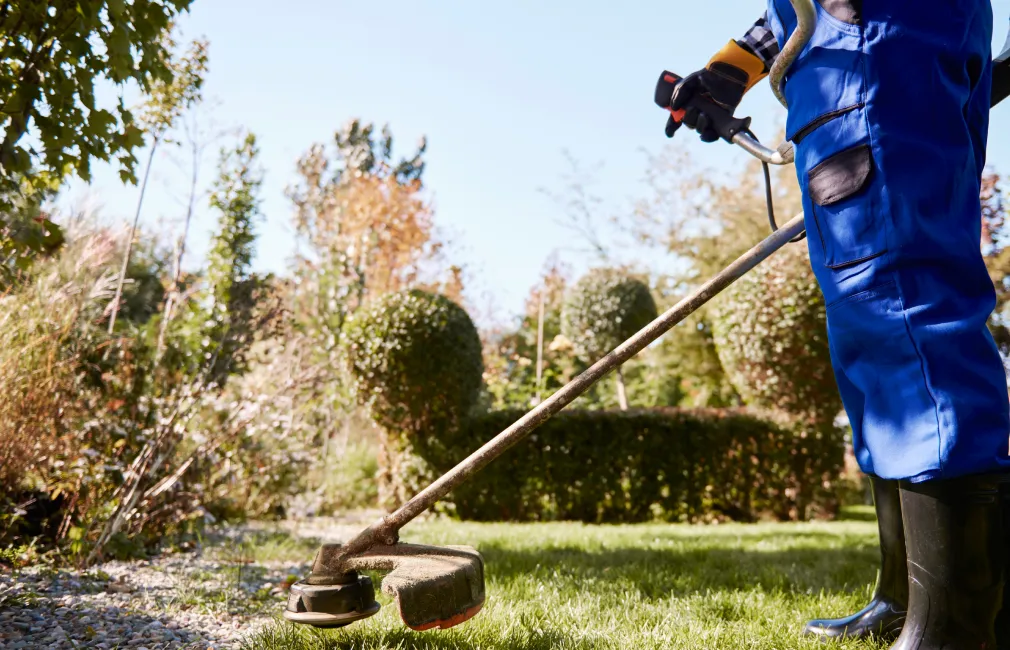
Blade-style rotary edgers produce the cleanest vertical cuts along concrete and paver borders, while string trimmers are generally more appropriate for softer transitions between turf and decomposed granite or natural desert areas. As recommended in the Turfgrass Maintenance Guide for low-elevation Arizona, all clippings and debris generated during edging should be collected and removed from hardscape surfaces to prevent stormwater contamination and maintain a professional appearance.
What Neighborhoods Do We Serve Throughout Scottsdale, AZ?
- McCormick Ranch — Mature irrigated turf lots with extensive canal and lake frontage require consistent edging along pathways, curbing, and waterway borders where bermudagrass stolons aggressively encroach toward hardscape and water features
- Gainey Ranch — Large estate-style properties with expansive turf areas and decorative hardscape demand precise edge definition between lawn panels, paver walkways, and ornamental rock beds
- DC Ranch — Properties adjacent to the McDowell Sonoran Preserve feature turf-to-desert transitions that require careful edging to maintain clean borders without disturbing native desert soil or drainage patterns
- Grayhawk — Newer subdivision lots with compacted fill soils and extensive sidewalk frontage benefit from regular edging to control turf creep along concrete and community pathway systems
- Old Town Scottsdale — Smaller urban lots with narrow turf strips along sidewalks and driveways require frequent edging to maintain clean curb appeal in a high-visibility commercial-residential corridor
- North Scottsdale (Troon / Pinnacle Peak area) — Sloped desert lots with limited turf panels surrounded by decomposed granite and natural wash corridors need precise edge maintenance to prevent turf migration and irrigation runoff into adjacent desert areas